
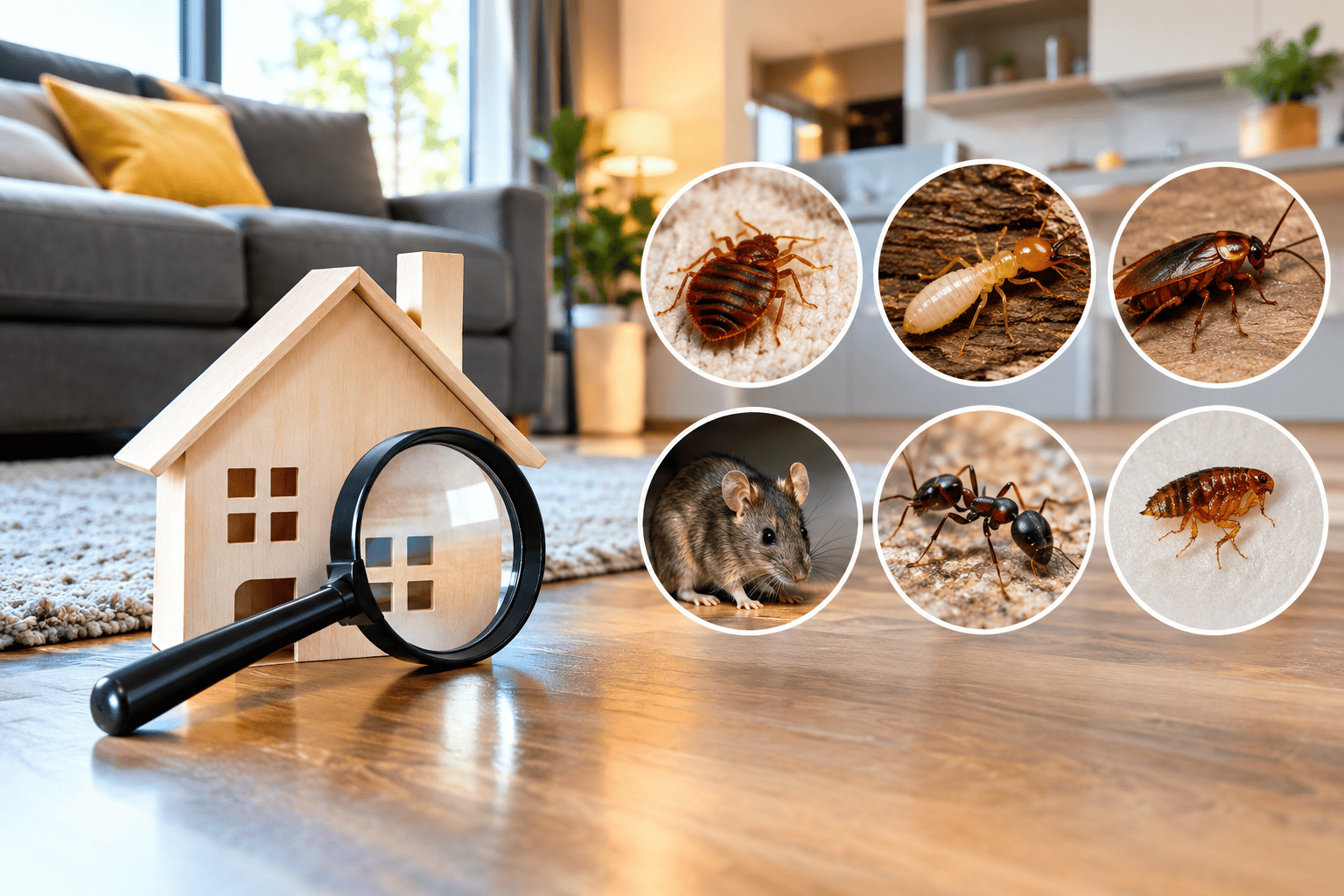
Some bugs are easy to spot and kill, while others may be present for weeks and reappear. If you are wondering what is the hardest pest to get rid of is, the answer often depends on how quickly a pest reproduces, where it hides, and how resistant it is to conventional control measures. Bed bugs, termites, cockroaches, and rodents are some of the most troublesome household pests. Knowing what makes these pests difficult to control can help you choose the right treatment and prevent another infestation from developing.
For reliable pest control solutions, trust Apex Pest Solutions to help protect your home from unwanted pests.
Hardest Pests: Which Household Infestations Are Most Difficult to Eliminate?
More than one spray or trap may be needed for some infestations. They may take shelter in hard-to-reach areas and are able to reproduce, making them hard to eradicate.
Read more:
Bed Bugs
Bed bugs are one of the most difficult house pests to control. They conceal themselves in mattresses, bed frames, furniture, cracks, and other small places. Eggs can also withstand the killing power of the treatments that are used to eliminate the active bugs. They are readily spread and hidden, so professional treatment is often required.
Cockroaches
Cockroaches are able to survive in various environments and adapt quickly to food and shelter available. These tend to live under sinks, behind appliances, under furniture, and in the cracks of a wall. Even if you are able to get rid of the cockroaches you can see, others may still be hidden. They can multiply quickly, so prompt treatment is important.
Termites
One challenge with termites is that much of the infestation that occurs may be concealed in those items. It is possible that you won’t know there is serious activity until there is damage. Termite elimination typically involves finding the source of the infestation and eradication of the colony, not just killing visible insects.
Rodents
It is hard to control mice and rats with their ability to fit through very small cracks and reproduce rapidly. They also get wary of traps following exposure. Good long-term rodent control involves removing food sources, closing entry points, and tackling nesting spots.
Ant Colonies
While it may be easier to get rid of ants, they may be more persistent in large colonies. Do not kill the ants you see; killing the colony does not necessarily mean killing the ants! More than one nest or colony may exist for some species, and activity may persist even when ants cannot be seen.
Fleas
Fleas may have various life stages (eggs and larvae) that can survive in the cracks and crevices in the floor and in furniture, bedding, and carpets. Only killing adult fleas may not be a solution. Breaking the Flea Life Cycle is often times necessary for pets, fabric, and indoor areas.
Pantry Moths
Pantry moths are a hard-to-eradicate pest as they can lay eggs and develop larvae within food packaging. Adult moths can be killed, but that will not end the infestation. The following may be performed: Check dry foods, remove infested foods, clean storage facilities, and watch for other infestations.
Wasps
Nests placed in other hard-to-reach areas, such as walls, attics, and roof spaces, can prove difficult to control. Disturbing an active nest may also lead to aggressiveness. Professional removal can assist in decreasing the risk and can ensure that the nest is appropriately handled.
Difficult Infestations: What Makes Certain Pests So Hard to Eliminate?
The most difficult pests generally have a number of characteristics that make them more resistant to the typical home remedy methods. These characteristics can be a key to understanding why an infestation is recurring.
Read more:
Rapid Reproduction
Fast-reproducing pests can multiply in number before it is noticed that they are causing damage. An infestation can rapidly grow to be massive if it starts with a few cockroaches or rodents. A fast-reproducing organism requires early treatment.
Hidden Nesting Areas
A large number of pests’ lives are spent in places you can’t spot. Secure hiding spots exist in wall cavities, furniture, gaps in flooring, an attic, a crawl space, and under the ground. Only treatment on visible areas will not affect the main infestation.
Resistant Eggs
There are pests that lay eggs which are more difficult to eradicate than adults. An infestation can go away and then come back again; hence this. Pest control methods must cover the entire life cycle and not just the visible part of the insect.
Easy Entry Points
Small cracks, gaps, vents, and openings around the house, as well as doors and windows, are possible entry points for rodents, insects, and other pests. New pest entry can occur after treatment if these entry points are still available.
Conclusion
No single pest is always the most difficult to control, as each pest infestation is unique. If you are wondering what is the hardest pest to get rid of is, bed bugs, termites, cockroaches, rodents, and fleas can all be particularly problematic because they are difficult to detect, breed rapidly, or survive partial treatments. The best chance of controlling these pests is early detection. If pests are still getting into your garden despite your best management, it is important to find out where they are coming from and apply a comprehensive treatment program to reduce the likelihood of the pest problem becoming more difficult to manage.
FAQs
Which pest is the toughest to get rid of?
Bed Bugs are undoubtedly one of the most difficult household pests to eradicate.
What are the fastest reproducing pests?
Cockroaches and rodents can breed rapidly in the home.
Is the treatment effective to exclude pests after they have been treated?
Yes, pests can re-infest if the source is left untreated.